
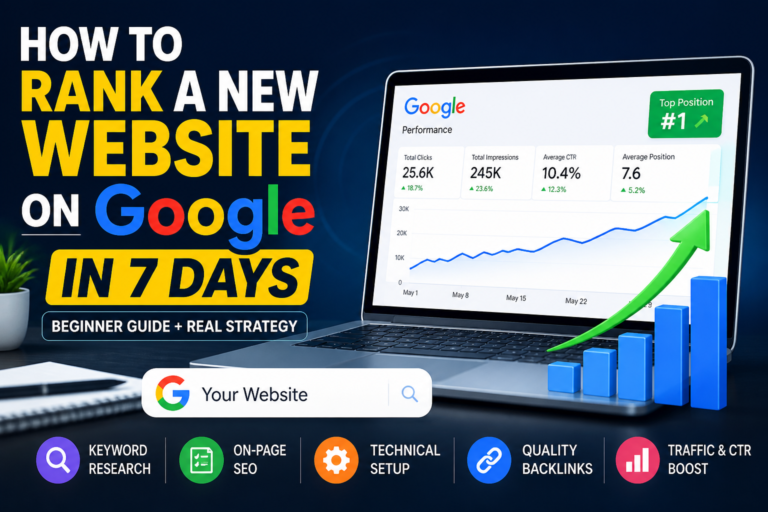
“How to Rank a New Website on Google in 7 Days – Beginner Guide + Real SEO Strategy”
Publishing a new website is easy. Getting it to appear on Google—and google actually rank—is where most people get stuck.
Many beginners assume that once a site goes live, traffic will follow. In reality, Google needs clear signals before it trusts and ranks a new domain. Without those signals, even great content can remain invisible.
This guide presents a practical, original, and execution-focused approach to help you move a brand-new website from zero visibility to early traction within 7 days. The goal is not unrealistic promises like instant #1 rankings, but fast indexing, early impressions, and initial keyword positioning.
If you follow this framework precisely, you will create a strong SEO foundation that continues to grow beyond the first week.
What Happens When You Launch a New Website? Google
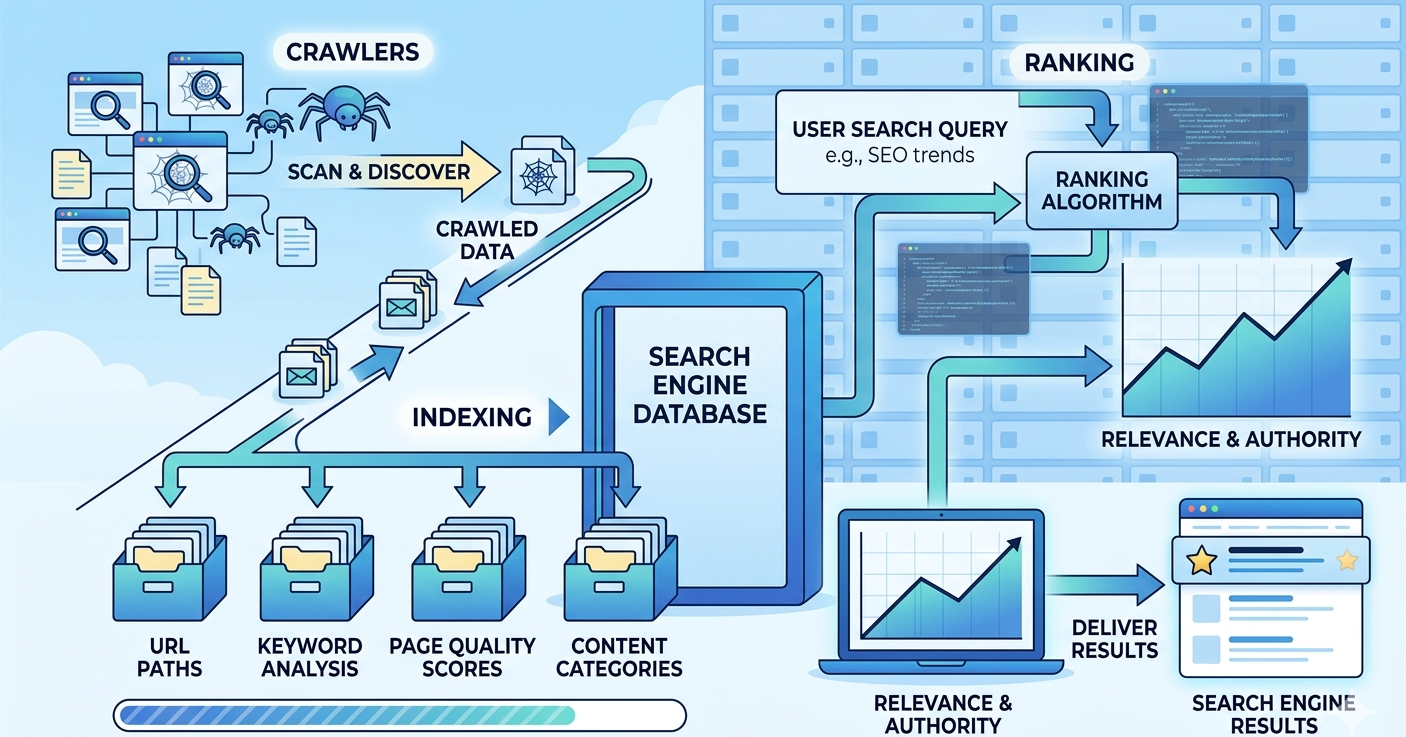
Understanding how Google processes new websites is critical before trying to rank.
1. Discovery (Crawling)
Search engines find your website through links, sitemaps, or direct submissions.
2. Storage (Indexing)
Your pages are analyzed and stored in Google’s database.
3. Positioning (Ranking)
Google evaluates relevance, quality, and authority to decide where your page appears.
The “New Website Delay” (Sandbox Effect)
Most new websites go through a temporary period where:
- Rankings are unstable or absent
- Trust signals are minimal
- Visibility is limited
This is often called the sandbox effect. While you cannot completely eliminate it, you can reduce its impact by sending strong early signals.
The 7-Day Execution Plan to Rank a New Website Google
This is not theory. This is a structured, day-by-day system designed for beginners.
Day 1: Keyword Research + Competitor Mapping Google
Objective

Identify keywords that are realistic to rank for within days—not months.
Step 1: Choose Low-Competition Keywords
Avoid broad, competitive keywords. Instead, target:
- Specific search phrases
- Problem-based queries
- Long-tail keywords
Example:
- Instead of: “SEO tips”
- Use: “how to rank a new website on google in 7 days”
Step 2: Analyze Search Results
Search your target keyword and evaluate:
- Content depth
- Structure
- Weaknesses in existing articles
Look for:
- Outdated information
- Poor formatting
- Missing steps
Step 3: Define Search Intent
Your content must satisfy three layers:
- Learning (basic understanding)
- Action (step-by-step guidance)
- Outcome (fast results)
If your content misses any of these, it will struggle to rank.
Day 2: On-Page SEO Setup Google
On-page SEO ensures your content is understandable for both users and search engines.
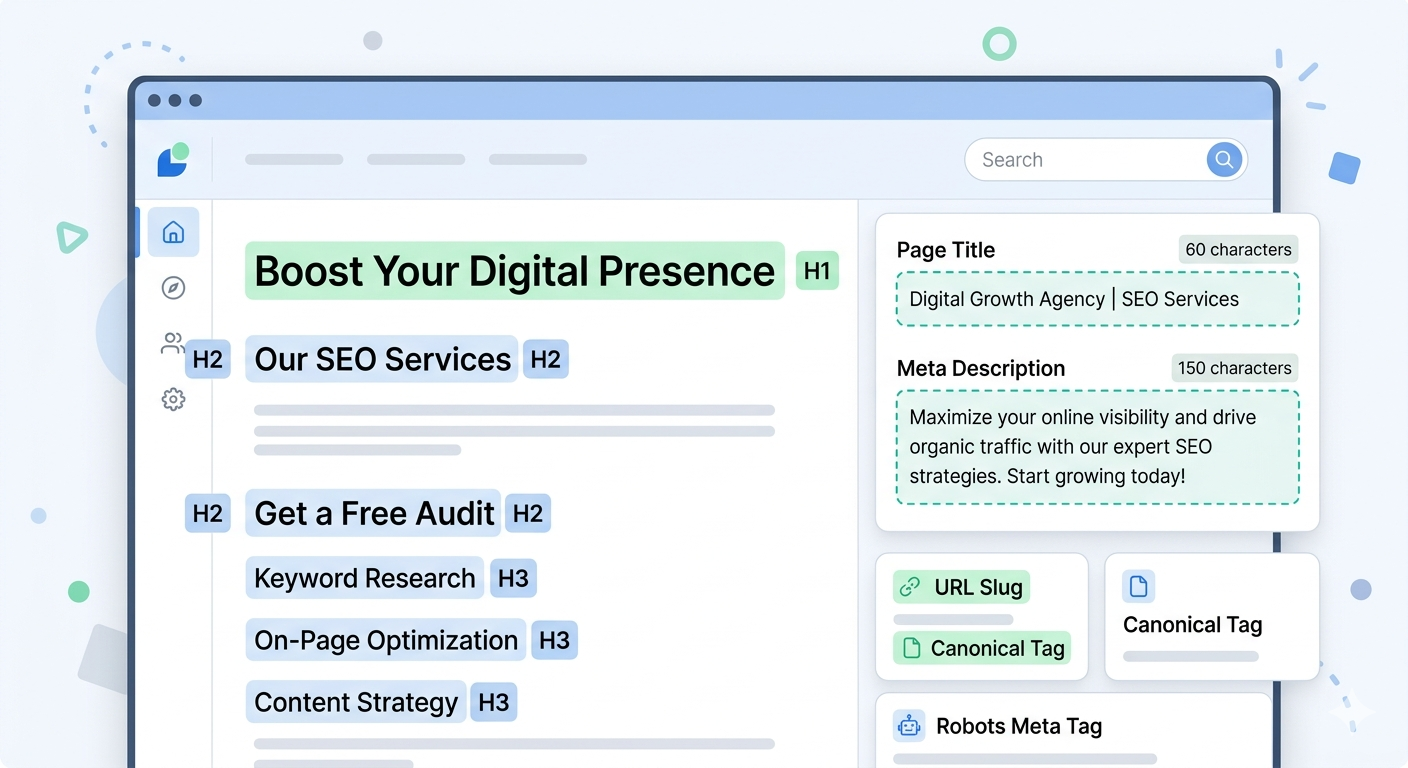
Core Elements to Optimize
Title Tag
Include your main keyword clearly and naturally.
Meta Description
Write a concise summary that encourages clicks.
URL Structure
Keep URLs short, readable, and keyword-focused.
Headings
Organize content using H1, H2, and H3 tags for clarity.
Image Optimization
Use descriptive alt text and compress images for faster loading.
On-Page SEO Essentials
- Place the keyword in the introduction
- Maintain natural keyword usage (avoid stuffing)
- Ensure mobile responsiveness
- Improve page speed
Day 3: Publish High-Quality Content Google
Content is the primary driver of ranking.
What “High-Quality” Actually Means
- Answers the user’s question completely
- Provides actionable steps
- Is easy to read and well-structured
Recommended Content Framework
- Introduction (problem + promise)
- Explanation (concept clarity)
- Execution steps (detailed guide)
- Mistakes to avoid
- FAQs
Content Depth Matters
Short, shallow articles rarely rank. Aim for:
- 2000+ words
- Clear sections
- Practical insights
Day 4: Indexing Your Website Quickly Google
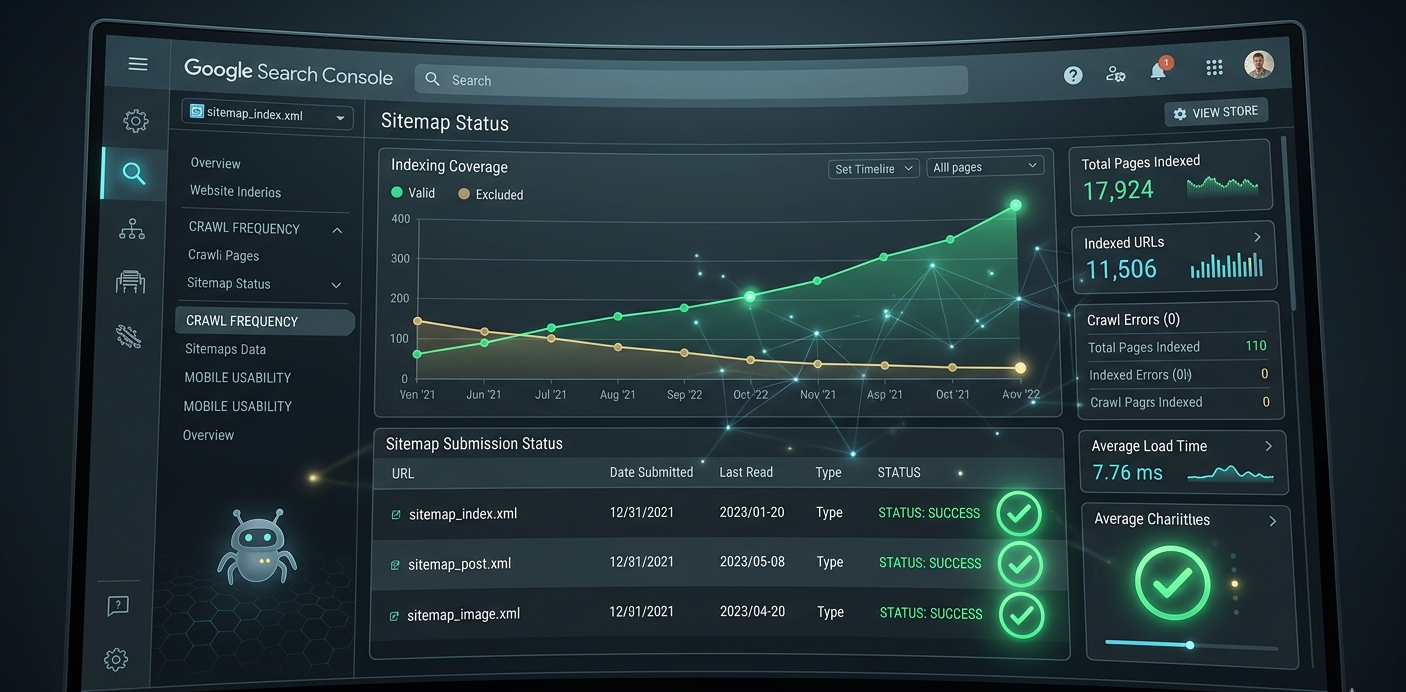
If your content is not indexed, it cannot rank.
Steps to Ensure Fast Indexing
- Add your site to search console
- Submit your sitemap
- Request indexing manually
- Link your new page internally
Additional Signals
- Share your article externally
- Update your sitemap after publishing
- Ensure no technical errors block crawling
These actions increase the chances of faster discovery.
Day 5: Internal Linking and Site Structure Google
Internal linking helps search engines understand your content hierarchy.
Benefits
- Faster crawling
- Better page relationships
- Improved user navigation
Best Practices
- Link related articles together
- Use descriptive anchor text
- Keep navigation simple
Example Structure
Homepage → Blog → SEO Guide → Subtopics
A clear structure improves both usability and indexing.
Day 6: Smart Backlink Strategy Google

Backlinks act as trust signals—but beginners often misuse them.
Safe Approaches
- Create social media profiles linking to your site
- Submit to relevant directories
- Engage in niche communities
What to Avoid
- Buying low-quality links
- Using automated tools
- Over-optimizing anchor text
Can You Rank Without Backlinks?
Yes, especially for low-competition keywords. Strong content and proper optimization can be enough in the early stage.
Day 7: Traffic Signals and CTR Optimization Google
At this stage, your goal is to show Google that users find your content valuable.
Why Engagement Matters
Google evaluates:
- Click-through rate
- Time spent on page
- Interaction levels
How to Generate Initial Traffic
- Share your content on social platforms
- Send it to relevant groups
- Encourage early engagement
Improve Click-Through Rate
- Use clear and compelling titles
- Include numbers or benefits
- Avoid vague wording
Advanced Techniques to Accelerate Ranking Google
Build Topical Depth
Instead of publishing one article, create multiple related posts around the same topic. This builds authority over time.
Strengthen Trust Signals
Include:
- Practical experience
- Clear explanations
- Consistent publishing
Update Content Regularly
Refreshing content signals relevance. Update:
- Statistics
- Examples
- Sections that can be improved
Common Mistakes to Avoid
Many beginners slow their progress due to avoidable errors:
- Choosing highly competitive keywords
- Publishing incomplete content
- Ignoring indexing steps
- Focusing only on backlinks
- Neglecting mobile optimization
Avoiding these mistakes alone can significantly improve your results.
Essential Free Tools
To execute this strategy effectively, use:
- Search performance tracking tools
- Website analytics tools
- Keyword research platforms
These help you monitor progress and refine your strategy.
Realistic Expectations
Clarity is important.
What You Can Achieve in 7 Days
- Your website gets indexed
- Your pages start appearing in search results
- You gain impressions for targeted keywords
What Takes More Time
- High rankings for competitive terms
- Strong domain authority
- Consistent organic traffic
Key Insight
The first 7 days are about momentum, not dominance.
If done correctly, this phase sets up long-term growth.
Frequently Asked Questions
Can a brand-new website rank in 7 days?
It can gain visibility and rank for low-competition keywords, but top rankings usually take longer.
What is the fastest way to get indexed?
Submitting your site and requesting indexing directly speeds up the process significantly.
Are backlinks required in the beginning?
They help, but they are not essential in the early stage if your content is strong and well-optimized.
How long does it take to see consistent results?
Typically, noticeable growth occurs within a few weeks, depending on competition and effort.
Final Thoughts Google
Ranking a new website is not about shortcuts or tricks. It’s about clarity, structure, and execution.
About the Author



jvmwho