
Why SEO in 2026 Is Not What Most Blogs Are Still Teaching
SEO in 2026 is no longer a marketing trick. It is a visibility system.
Google Search today is powered by:
Web crawlers that scan billions of pages
Ranking signals powered by machine learning
E-E-A-T scoring models
User behavior data
AI-generated search answers
Voice search
Generative AI summaries
Traditional blue link SERPs
This means one thing.
Your website is not competing with other websites.
It is competing with Google’s own AI answers.
So if you are asking what is SEO in 2026, the real definition is:
SEO is the process of making your website the most trusted and most complete answer source for a topic across Google Search, AI results, and voice queries.
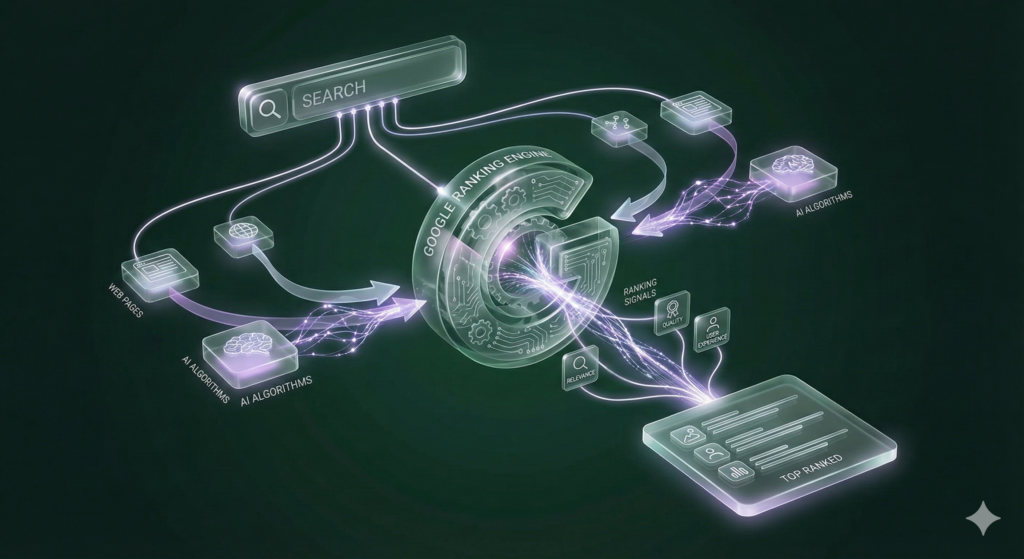
How Google Ranks Websites in 2026
When people search how Google ranks websites in 2026, they expect a list of factors.
The truth is deeper.
Google uses three major systems.
1. The Crawl and Index System
Before anything ranks, Google must be able to:
Find your page
Read it
Understand it
Store it in the Search Index
This is where technical SEO decides your future.
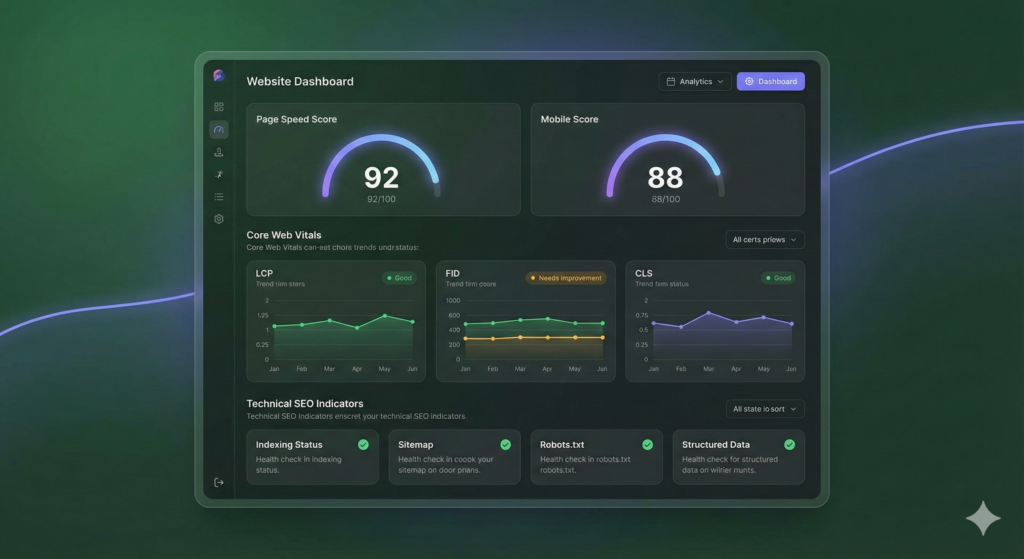
If your website has:
Slow pages
Broken links
Poor mobile experience
Heavy scripts
Indexing issues
Then even the best content will not rank.
That is why Core Web Vitals, Page Experience, and clean code now directly impact Google ranking factors.
2. The Relevance Engine
Once indexed, Google asks one question.
Does this page match the search intent?
If someone searches how to optimize a website for Google, Google looks for pages that include:
Clear steps
Technical explanations
Content strategy
Real examples
Structured answers
This is why keyword optimization in 2026 means topic depth, not keyword repetition.
Your page must speak the language of:
Search intent
User problems
Related entities
Semantic meaning
That is how Google understands your content.
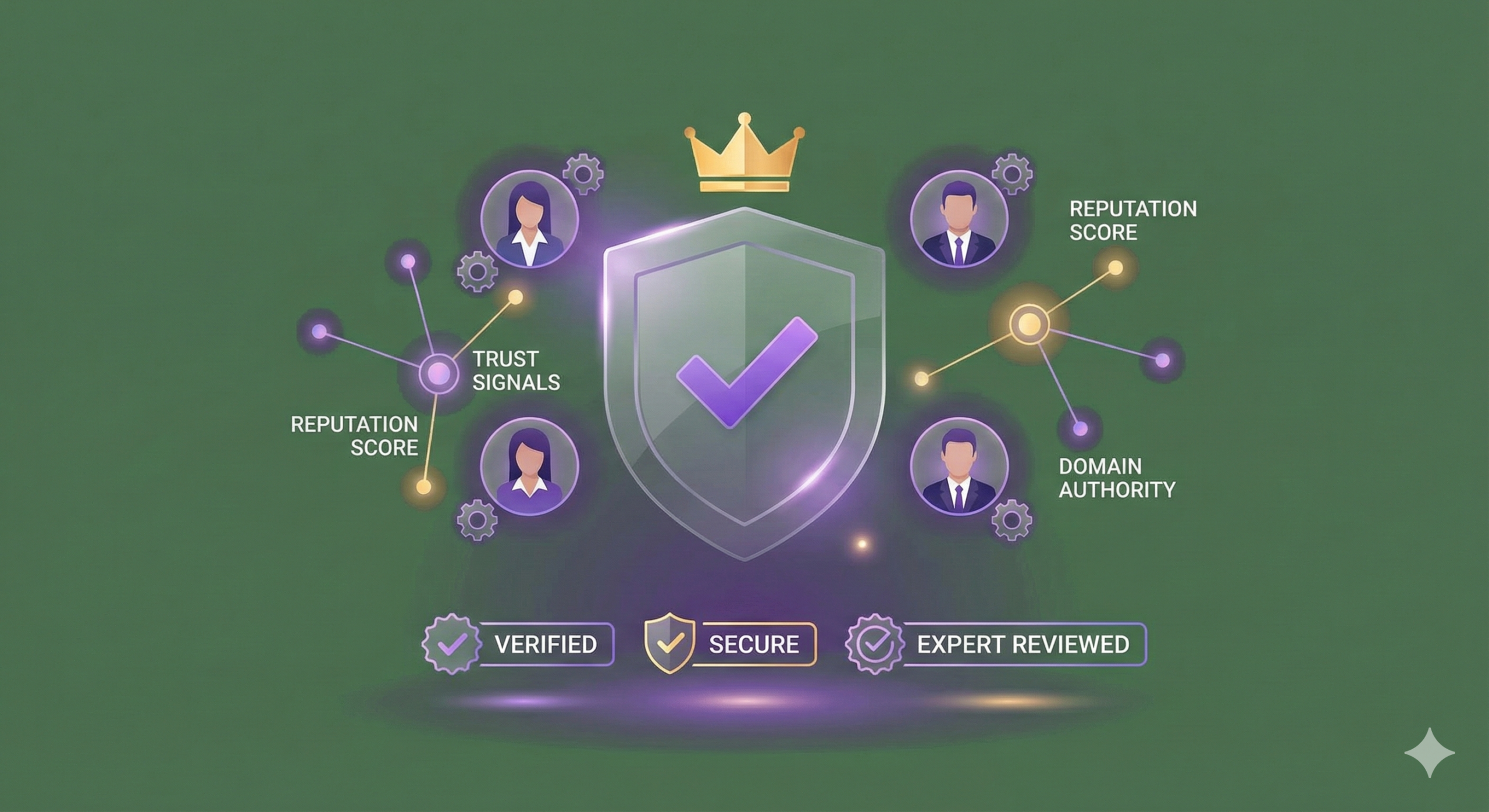
3. The Trust and Authority System
Google no longer trusts pages.
It trusts brands.
It checks:
Backlinks from authoritative websites
Mentions across the web
User engagement
Site authority
Content history
Publishing consistency
This is how E-E-A-T is measured.
Experience, expertise, authority, and trust decide whether your site becomes a long-term traffic asset or a short-term spike.
SEO Strategy 2026. What Actually Works
If you want to build a real SEO strategy for 2026, it has four pillars.
Pillar 1. Technical SEO as the Foundation
This includes:
Fast loading pages
Mobile-first design
Clean HTML
Optimized images
Secure HTTPS
Proper indexing
Crawlable architecture
Without this, your site leaks rankings.
Performance is no longer a UX issue.
It is a ranking signal.
Pillar 2. Content SEO Based on Intent
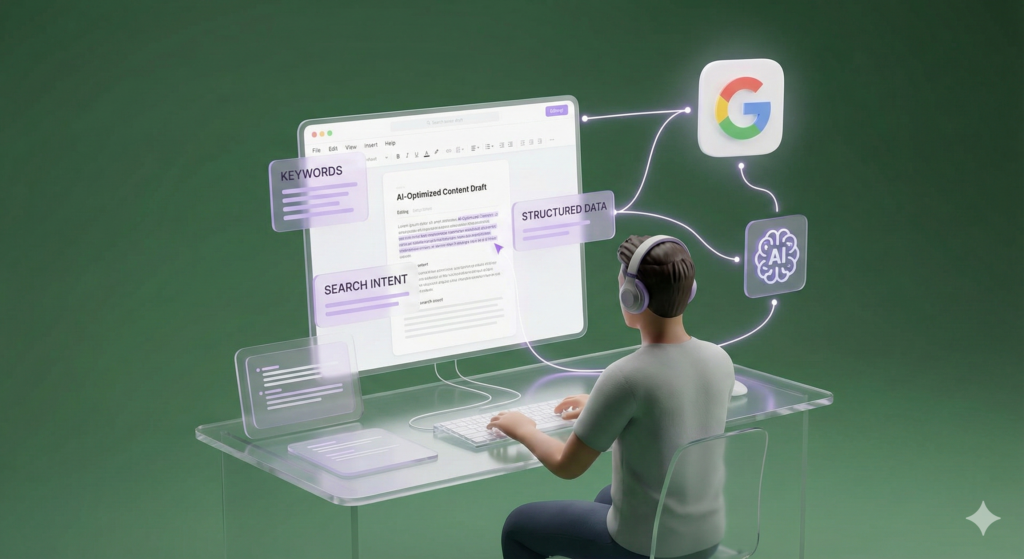
Modern content SEO means:
Writing for humans
Structuring for Google
Optimizing for AI answers
Answering questions clearly
Providing depth
Every page must target one core question.
That is how you win featured snippets, voice search, and AI results.
This is how you get search visibility in 2026.
Pillar 3. Authority Through Backlinks and Brand Mentions
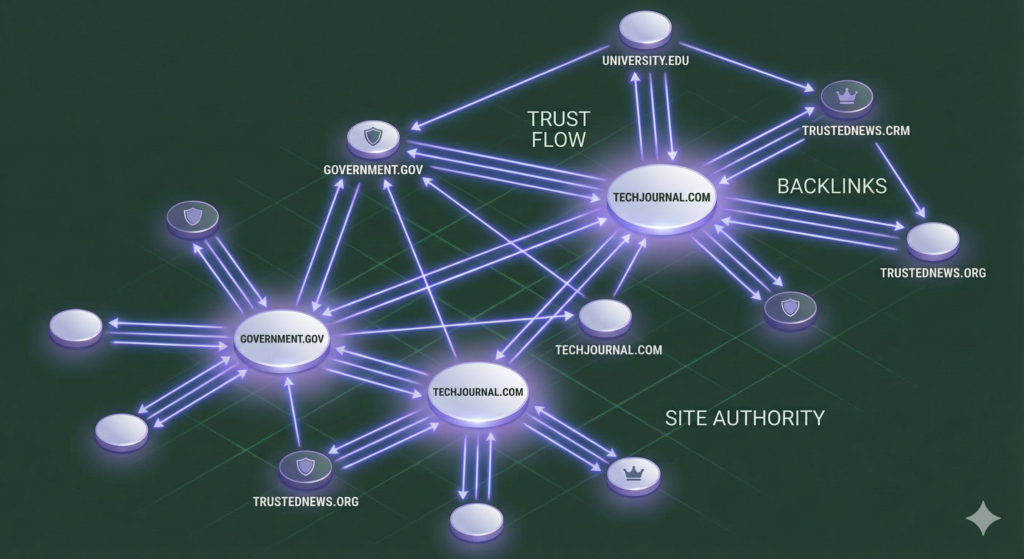
Backlinks still matter because they tell Google:
Other websites trust this source.
But now Google also tracks:
Brand searches
Branded mentions
Engagement
Return visits
SEO is now tied to reputation.
Pillar 4. Data Driven Optimization
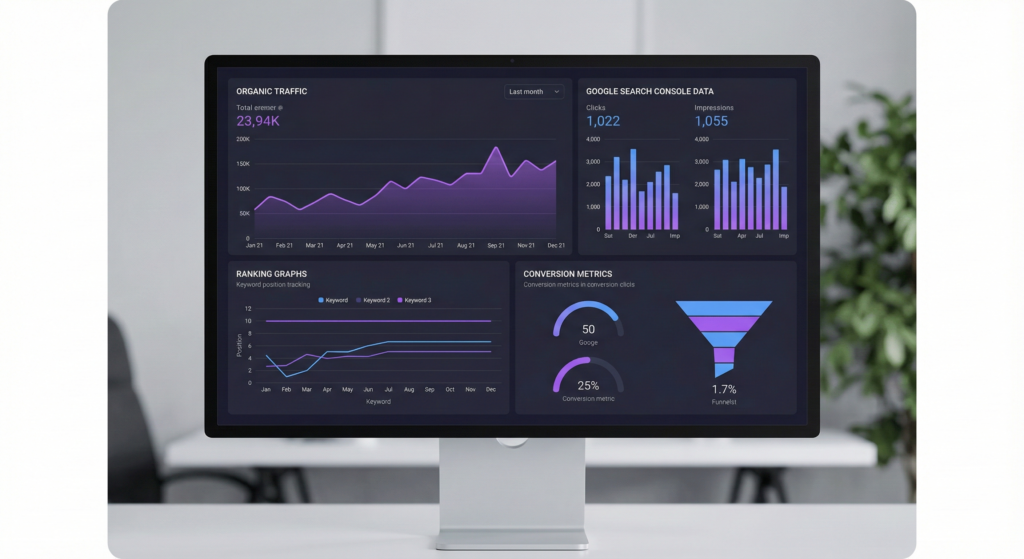
Google Analytics and Google Search Console are no longer optional.
They show:
What keywords bring traffic
Which pages get impressions
What users click
Where people leave
What pages convert
This is how you improve organic traffic month after month.
AEO. Answer Engine Optimization in 2026
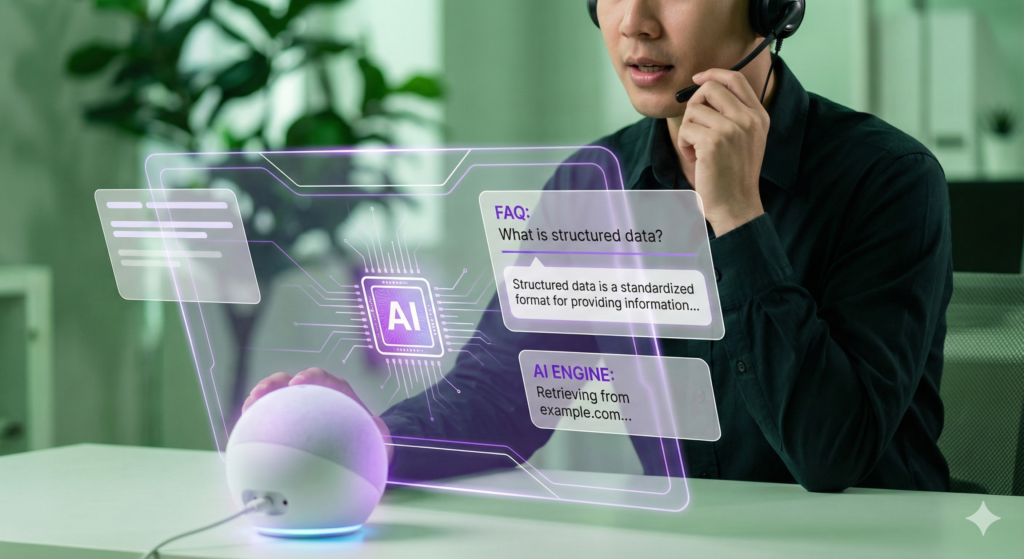
Google is no longer just a search engine.
It is an answer engine.
This means your content must:
Directly answer questions
Use simple language
Be structured
Include FAQs
Provide step-by-step guidance
If someone asks a voice assistant how to improve Google ranking, Google pulls data from pages that are clear and structured.
That is AEO.
GEO. Generative Engine Optimization
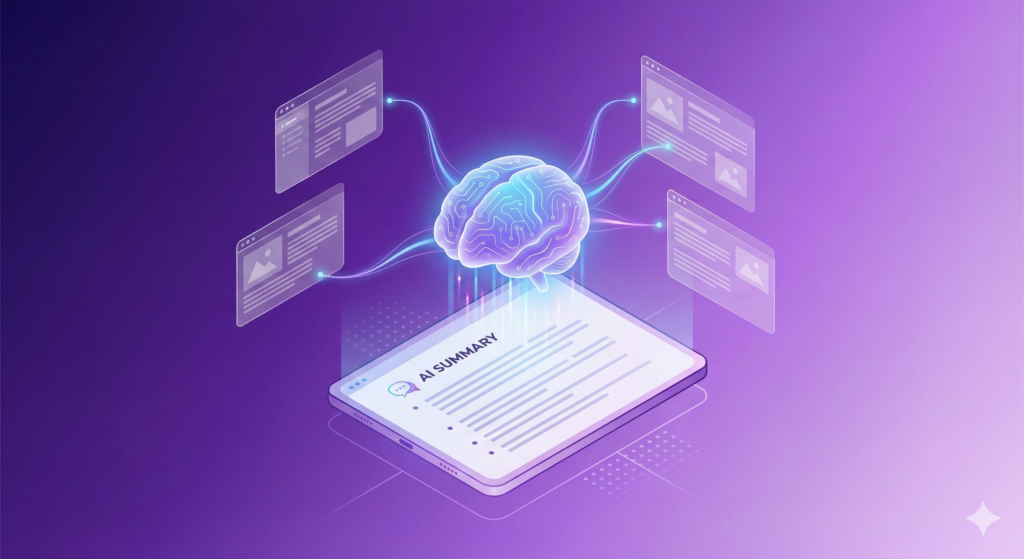
Generative AI now summarizes websites.
To appear in AI answers, your content must:
Be factually accurate
Be clearly written
Include entities
Cover the topic fully
Be updated
Be trustworthy
AI pulls from websites it trusts.
That trust comes from content quality, backlinks, and consistent publishing.
Does SEO Still Work in 2026?
Yes. But not in the old way.
SEO today is about building a search asset.
A website that:
Google indexes
AI reads
Users trust
And brands reference
This is why brands that invest in SEO get compounding traffic.
How Long Does SEO Take to Work?
This depends on trust.
If your website is new.
3 to 6 months.
If your website already has authority.
Weeks.
SEO works faster now because Google processes data faster.
But it only rewards quality.
What Affects Google Search Ranking Today
The biggest ranking signals in 2026 are:
Content quality
Search intent match
Page experience
Backlinks
Site authority
User engagement
Indexing health
All of them are measurable.
There is no mystery anymore.
Final Truth About SEO in 2026
SEO in 2026 is not about hacking Google.
It is about becoming the best answer on the internet for your topic.
If your website helps people.
If it loads fast.
If it is trusted.
If it is well structured.
Google will rank it.
That is how search engine optimization really works now.
SEO, GEO, AEO & AIO in 2026. The New Search Stack Every Brand Must Use
This is a great breakdown of the 2026 landscape! I especially agree with your point about Google shifting from a search engine to an “answer engine.” With E-E-A-T becoming so dominant and the focus moving toward “brand trust” over just backlinks, I’ve been looking for real-world examples of agencies that actually practice what you’re preaching here. Specifically, regarding your Pillar 3 (Authority), I came across https://rotgar.com and noticed they mention using “non-standard White-SEO methods” and focusing on deep niche authority for medical sites. Based on your 2026 criteria, do you think their approach of directly involving the CEO in strategy and focusing on reputational risk management is going to be the standard for “brand-centric” SEO moving forward, or is that still more of a premium boutique tactic?
Pingback: How to Start Dropshipping Business in 2026 – Step-by-Step Guide
whoah this blog is fantastic i love reading your articles. Keep up the great work! You know, a lot of people are looking around for this info, you can aid them greatly.
The points are useful when comparing different investment strategies.
Bond Calculator